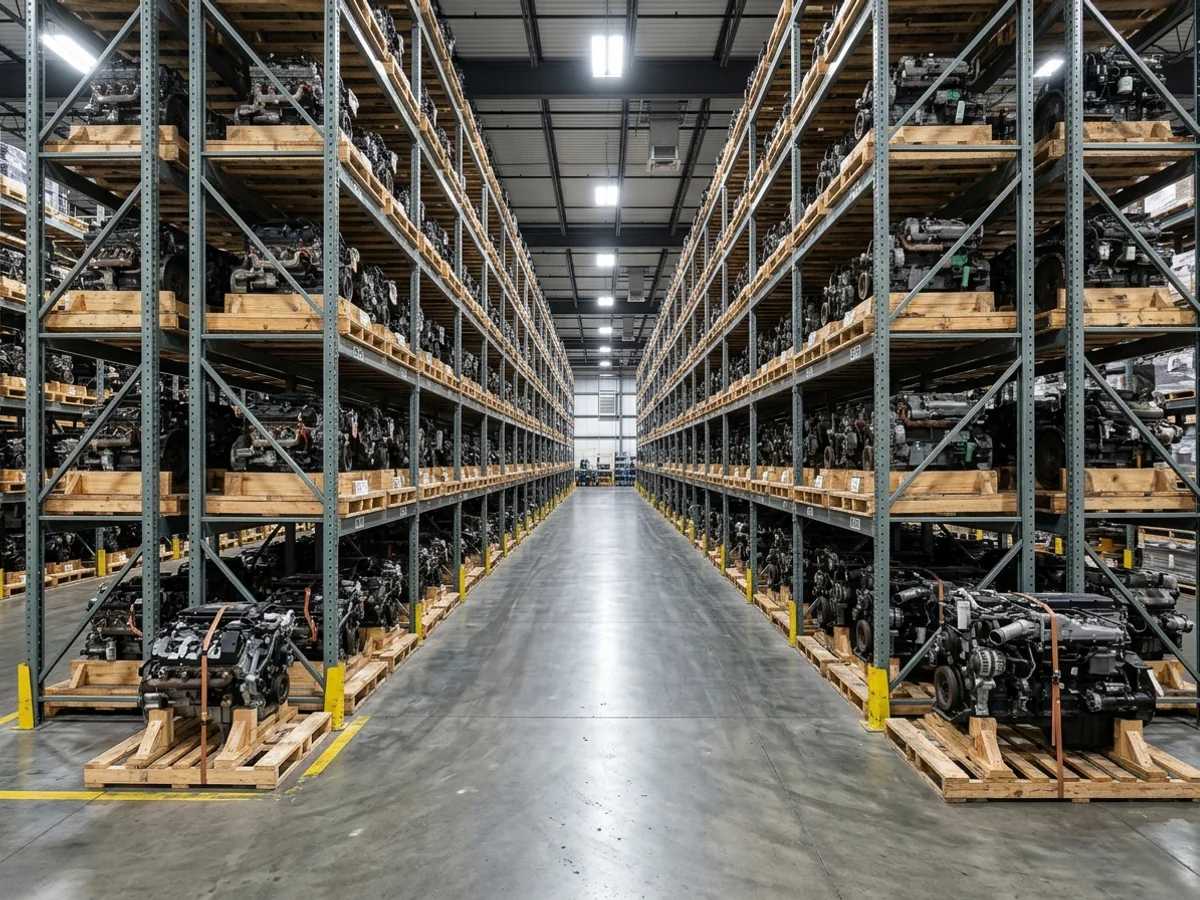
Used Engines For Sale: What to Know Before You Buy
A used engine can be the most affordable fix, if the donor engine's history and condition are known. We keep engine inventory and ship nationwide; call with your VIN to check availability.
Used Engines: What You Should Know
A used engine is pulled from a donor vehicle, often one that was in a collision while the engine itself was healthy. It is usually the lowest-cost way to replace a failed engine, which makes sense for an older vehicle or a tight budget. The trade-off is uncertainty: you are buying an engine with an unknown amount of wear. The information you can get about the donor vehicle and the engine's condition is what separates a good used engine from a gamble. This page covers what to ask and check. For options for your vehicle, call with your VIN.
Common Symptoms & Warning Signs
Recognize these warning signs early to avoid catastrophic drivetrain damage.
Older Vehicle With a Failed Engine
When the vehicle's value is close to the cost of a remanufactured engine, a used engine can keep it on the road affordably.
Spun Bearing or Rod Knock
Bottom-end failure usually means the engine needs replacing. A used engine is the budget option.
Timing Failure on an Interference Engine
Bent valves and damaged pistons often make a replacement engine cheaper than repairing the original.
Need to Get Back on the Road on a Budget
A used engine typically costs less upfront than a new or remanufactured engine.
How the Problem Is Diagnosed
We believe in data-driven diagnostics. Rather than guessing with expensive replacement parts, our technicians follow rigorous diagnostic protocols.
Ask About the Donor Vehicle
Ask for the donor's mileage, how it was damaged (front, rear or side impact), and whether there is any sign of flood damage.
Ask What Testing Was Done
Compression test results, whether it was run before removal, and whether the oil was inspected for metal or coolant all reduce the risk.
Confirm It Is the Right Engine
Match by VIN and engine code, including emissions equipment, sensors and wiring connectors.
Get the Warranty in Writing
Used-engine warranties are usually short and vary by supplier. Check the length, whether labor is covered, and any installation requirements.
Repair & Replacement Options
Used Engine Only
Buy the engine and have your own mechanic install it. Check whether the warranty requires professional installation.
Used Engine With Installation
Ask about installation when you call. Our used engine installation page explains what should be replaced during the swap.
Consider Remanufactured Instead
For a vehicle you plan to keep for years, a remanufactured engine's new wear parts and longer warranty can be better value.
Repair vs. Rebuild vs. Replacement Decision Guide
Match the choice to the vehicle: used for an older or lower-value vehicle, remanufactured for a vehicle you plan to keep long-term.
Repair
If the damage is limited to external or top-end components, repair may cost less than any replacement engine.
Remanufactured Engine
Higher upfront cost than used, but new wear parts and typically longer warranty coverage.
Used Engine
Lowest upfront cost. Best for older vehicles when the donor's mileage and condition are documented.
Common Vehicles & Powertrains Involved
Examples of vehicles where this work is commonly needed. Call with your year, make, model and engine to confirm we can help with your specific vehicle.
- • Chevy / GMC 4.8L, 5.3L, 6.0L and 6.2L V8
- • Ford 5.0L Coyote, 5.4L Triton, 3.5L EcoBoost
- • Ram 5.7L Hemi, 3.6L Pentastar
- • Toyota 2.5L, 3.5L V6, 4.7L and 5.7L V8
- • Honda 1.5L Turbo, 2.4L, 3.5L
- • Nissan 2.5L and 3.5L
- • BMW and Mercedes-Benz (check parts availability)
- • Audi / Volkswagen 2.0L TSI
- • Work vans (Chevy Express, Ford Transit)
- • Half-ton and heavy-duty pickups
How the Process Works
Call With Your VIN
Share your VIN, mileage and what happened to the engine.
Review Options & History
Ask about the donor mileage, testing information and the price of each option.
Confirm Terms
Warranty, price and how you will receive the engine are confirmed before you buy.
Install
Ask about installation or use your own mechanic.
Frequently Asked Questions About Used Engines
Related Powertrain Services
What a proper used-engine swap includes.
Compare new, remanufactured and used engines.
When remanufactured is the better value.
Engine replacement options explained.
Search engine families by manufacturer, engine code, vehicle or category.
Call to Discuss Your Repair
Engine and transmission problems are easiest to explain by phone. Tell us your vehicle and symptoms (slipping, noises, warning lights) and we'll explain the likely next steps and how an estimate works.
Phone estimates are non-binding. You receive a written quote after inspection, and no work starts without your approval.
Warranty: Warranty coverage is available. Terms depend on the repair, part or engine and are stated in writing on your quote.
Towing: Towing is available. Ask about towing for your location when you call.